1. Who is known as the father of the Indian Constitution?
a) Mahatma Gandhi
b) B.R. Ambedkar
c) Jawaharlal Nehru
d) S. Radhakrishnan
Dr. B.R. Ambedkar was appointed as the Chairman of the Drafting Committee of the Indian Constitution and is widely recognized as its architect.
Why other options are incorrect:
Mahatma Gandhi:
While Mahatma Gandhi is revered as the "Father of the Nation", he was not involved in the drafting of the Constitution.
Jawaharlal Nehru:
Nehru was the first Prime Minister of India and played a significant role in shaping the nation after independence. However, he was not the architect of the Constitution. Some argue that Nehru's subsequent amendments to the Constitution make him a sort of "father" of the amended constitution, but this is not the standard view.
S. Radhakrishnan:
Radhakrishnan was a prominent Indian philosopher and scholar who later became the President of India. He was not involved in the drafting of the Constitution.
2. The capital of Australia is:
a) Sydney
b) Melbourne
c) Canberra
d) Brisbane
Canberra is the capital city of Australia, chosen as a compromise between Sydney and Melbourne, and serves as the country's political center.
Here's why the other options are incorrect:
Sydney is Australia's largest city and a major cultural and economic hub, but not the capital.
Melbourne is Australia's second-largest city and has been a temporary capital in the past, but not the current one.
Brisbane is the capital of Queensland and a significant city, but it is not the capital of Australia.
3. Which gas is most abundant in the earth’s atmosphere?
a) Oxygen
b) Nitrogen
c) Carbon dioxide
d) Hydrogen
Nitrogen makes up roughly 78% of the Earth's atmosphere, compared to around 21% oxygen, a much smaller fraction. Carbon dioxide and hydrogen are present in even smaller quantities.
4. Which is the longest river in India?
a) Ganga
b) Godavari
c) Brahmaputra
d) Yamuna
The Ganga is the longest river in India among the given options, with a length of approximately 2,525 kilometers. The Godavari is the next longest, while the Brahmaputra's total length is significantly longer but most of its course is outside India.
River Lengths
5. The “Right to Information” Act was enacted in:
a) 2000
b) 2002
c) 2005
d) 2010
The "Right to Information" Act was enacted in c) 2005. The Act was passed by the Parliament of India, received Presidential assent on June 15, 2005, and was notified in the Official Gazette on June 21, 2005.
Key Details:
6. Which planet is called the Morning Star?
a) Mercury
b) Venus
c) Mars
d) Jupiter
Venus is often visible in the morning sky before sunrise and in the evening sky after sunset due to its brightness, making it known as the "Morning Star" or "Evening Star".
Why other options are incorrect:
7. Who wrote “Discovery of India”?
a) Jawaharlal Nehru
b) Mahatma Gandhi
c) S. Radhakrishnan
d) B.R. Ambedkar
Jawaharlal Nehru wrote “The Discovery of India,” a book he composed while imprisoned by British colonial authorities at Ahmednagar Fort in the 1940s. The book is a broad, extensive view of Indian history, philosophy, and culture, and it serves as a significant work of Indian history written by the future first Prime Minister of India. Therefore, option (a) is the correct answer.
8. The primary component of natural gas:
a) Methane
b) Ethane
c) Propane
d) Butane
Methane is the most abundant component of natural gas, typically constituting around 98% of it. While natural gas also contains other hydrocarbons like ethane, propane, and butane, methane is considered the primary component.
Why other options are incorrect:
b) Ethane:
Ethane is present in natural gas but only in smaller quantities compared to methane. It's a larger hydrocarbon molecule than methane.
c) Propane:
Propane is another hydrocarbon present in natural gas, but again in smaller amounts than methane. It's a larger molecule than both methane and ethane.
d) Butane:
Butane is the least abundant of the listed hydrocarbons in natural gas. It's the largest molecule among the options.
9. Headquarters of UNICEF:
a) Geneva
b) New York
c) Paris
d) London
The headquarters of UNICEF (United Nations Children's Fund) is located in New York City, USA.
Here's why the other options are incorrect:
10. Fundamental Rights are enshrined in which part of the Indian Constitution?
a) Part III
b) Part IV
c) Part V
d) Part VI
Part III of the Indian Constitution deals with Fundamental Rights, which are guaranteed to citizens and protect their basic liberties like freedom of speech, religion, and equality.
Why other options are incorrect:
Part IV:
This part deals with Directive Principles of State Policy, which are guidelines for the government to strive towards achieving a welfare state. These are not enforceable rights like Fundamental Rights.
Part V:
This part covers the Union and its Territories. It includes provisions related to the structure and functioning of the government, including the President, Council of Ministers, and Parliament.
Part VI:
There is no Part VI in the Indian Constitution [1, 2, 3, 4, 5, 6, 7, 8, 9, 10, 11, 12, 13, 14, 15, 16, 17, 18, 19, 20, 21, 22, 23, 24, 25, 26, 27, 28, 29, 30, 31, 32, 33, 34, 35, 36, 37, 38, 39, 40, 41, 42, 43, 44, 45, 46, 47, 48, 49, 50, 51, 52, 53, 54, Appendix I, Appendix II, Appendix III, Appendix IV, Appendix V, Appendix VI, Appendix VII, Eighth Schedule, Ninth Schedule, Tenth Schedule, Eleventh Schedule, Twelfth Schedule, List I, List II, List III, List IV, Fifth Schedule, Sixth Schedule, Seventh Schedule, Eighth Schedule, Ninth Schedule, Tenth Schedule, Eleventh Schedule, Twelfth Schedule].
11. Who discovered penicillin?
a) Alexander Fleming
b) Louis Pasteur
c) Robert Koch
d) Joseph Lister
Alexander Fleming, who discovered penicillin in 1928 when he observed that a mold (a Penicillium fungus) in a petri dish inhibited the growth of bacteria.
Here's why the other options are incorrect:
Louis Pasteur is known for developing pasteurization and the germ theory of disease, not for discovering penicillin.
Robert Koch is famous for identifying the bacteria that cause specific diseases, like tuberculosis, but not penicillin.
Joseph Lister was a surgeon who pioneered the use of antiseptics in surgery, not the discovery of penicillin.
12. Which organ is responsible for insulin production?
a) Liver
b) Pancreas
c) Kidney
d) Stomach
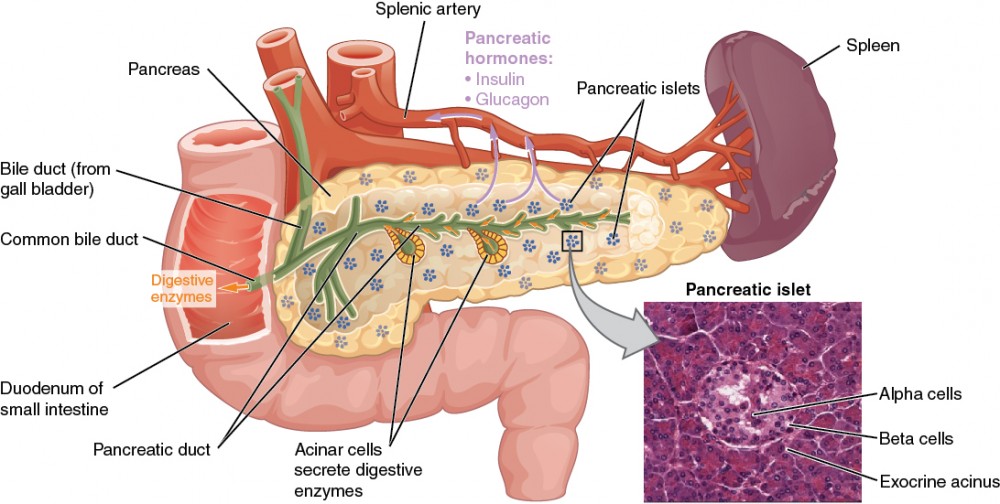
The pancreas is the organ responsible for producing insulin, a hormone that regulates blood sugar levels by helping glucose enter cells.
Why other options are incorrect:
a) Liver: The liver plays a crucial role in metabolism, but it does not produce insulin.
c) Kidney: Kidneys are primarily responsible for filtering waste from the blood and producing urine. They do not produce insulin.
d) Stomach: The stomach is primarily responsible for digestion. While it produces some hormones, insulin is not one of them.
13. When is International Yoga Day celebrated?
a) 21st June
b) 22nd June
c) 20th June
d) 23rd June
International Yoga Day is celebrated on 21st June. The United Nations declared June 21st as the International Day of Yoga in 2014, and it was first observed in 2015. The date was chosen because it is the Summer Solstice, the longest day of the year in the Northern Hemisphere.
Key Details
14. Which Indian state is known as the “Land of Five Rivers”?
a) Punjab
b) Haryana
c) Uttar Pradesh
d) Rajasthan
The name "Punjab" is derived from the Persian words "panj" (five) and "ab" (water), referring to the five rivers that flow through the region: Sutlej, Beas, Ravi, Chenab, and Jhelum.

15. Who wrote “Gitanjali”?
a) Rabindranath Tagore
b) Sarojini Naidu
c) Bankim Chandra Chatterjee
d) Kazi Nazrul Islam
Rabindranath Tagore wrote Gitanjali. The correct option is a) Rabindranath Tagore.
More facts about Gitanjali:
16. The currency of Japan:
a) Yen
b) Dollar
c) Pound
d) Yuan
The currency of Japan is the Yen, symbolized as ¥ and abbreviated as JPY. It was adopted in 1871 and is one of the most traded currencies in the foreign exchange market.
Here's why Yen is the correct answer:
17. First woman Prime Minister of India:
a) Pratibha Patil
b) Indira Gandhi
c) Sonia Gandhi
d) Sarojini Naidu
The correct answer is b) Indira Gandhi. She was the first and, to date, only female Prime Minister of India, serving from 1966 to 1977 and again from 1980 to 1984.
Here's why the other options are incorrect:
18. Who is called the Missile Man of India?
a) A.P.J. Abdul Kalam
b) Vikram Sarabhai
c) Homi Bhabha
d) Satish Dhawan
A.P.J. Abdul Kalam is known as the "Missile Man of India" due to his pioneering work in developing India's missile and space programs, particularly the successful launch of the SLV-III and the Agni and Prithvi missiles.
19. The Battle of Kalinga led to which immediate policy shift by Ashoka?
(a) Expansion into Deccan
(b) Adoption of Dhamma and non-violence
(c) Alliance with Seleucids
(d) Introduction of cavalry reforms
The correct answer is (b) Adoption of Dhamma and non-violence. After witnessing the extreme carnage of the Battle of Kalinga in 261 BCE, Emperor Ashoka was filled with remorse and experienced a profound transformation. This led him to abandon the traditional policy of digvijaya (conquest by force) in favor of dhammavijaya (conquest by righteousness).
Key aspects of this immediate policy shift include:
This historical turning point is prominently described in Ashoka's Rock Edict XIII.
20. The Ryotwari system was first introduced under the leadership of:
(a) Lord Wellesley
(b) Thomas Munro
(c) Lord Cornwallis
(d) John Shore
(a) Lord Wellesley
(b) Thomas Munro
(c) Lord Cornwallis
(d) John Shore
The correct answer is (b) Thomas Munro.
Explanation: The Ryotwari system was a land revenue system implemented in British India, where the government collected taxes directly from the peasants (known as "ryots"). Sir Thomas Munro, the Governor of Madras Presidency, is credited with introducing this system. He was appointed Governor of Madras in 1820.
Why other options are incorrect:
(a) Lord Wellesley: Lord Wellesley was the Governor-General of India from 1798 to 1801 and again from 1805 to 1808. He is associated with the expansion of British territory in India, but not with the introduction of the Ryotwari system.
(c) Lord Cornwallis: Lord Cornwallis is known for introducing the Permanent Settlement system in Bengal and other parts of India. This system was different from the Ryotwari system, where the Permanent Settlement granted land ownership to zamindars (landlords), while the Ryotwari system dealt directly with the peasants.
(d) John Shore: John Shore was Governor-General of India from 1793 to 1798. He is not associated with the introduction of the Ryotwari system.

© 2024 | The Tutors Academy | Website Conceptualised and Developed by Promotion Paradise